Your cart is empty
Tax included and shipping calculated at checkout

Drawer menu
Tax included and shipping calculated at checkout

Germany: Free shipping for order above €49.90. Shipping fees €5.90 for orders under €49.90. For deliveries to German islands, an additional surcharge of €4.99 will be added at check-out.
Austria: Standard shipping fees €9.90
Zone 1: Spain (mainland), Italy (mainland), France, Portugal, Denmark, Netherlands, Belgium, Sweden, Luxembourg, Czech Republic, Estonia, Latvia, Lithuania, Poland, Slovakia, Hungary, Slovenia, Romania, Greece, Finland, Bulgaria, Croatia, Ireland.
Standard shipping fees €19.90
Zone 2: Switzerland, UK, Iceland, Norway, EU-Island (*Excluding import duties and taxes at destination. Generally deliveries to Switzerland, UK, Iceland and Norway do not attract customs duties due to preference goods agreement with Germany).
Standard shipping fees €29.90
Zone 3: Worldwide except Germany, Austria, Zone 1 and Zone 2 countries (excluding import duties and local taxes at destination)
Standard shipping fees €49.90
Orders are usually processed and dispatched within 3-5 business days. Delivery times vary according to locations.
All orders are shipped from our warehouse in Munich, Germany.
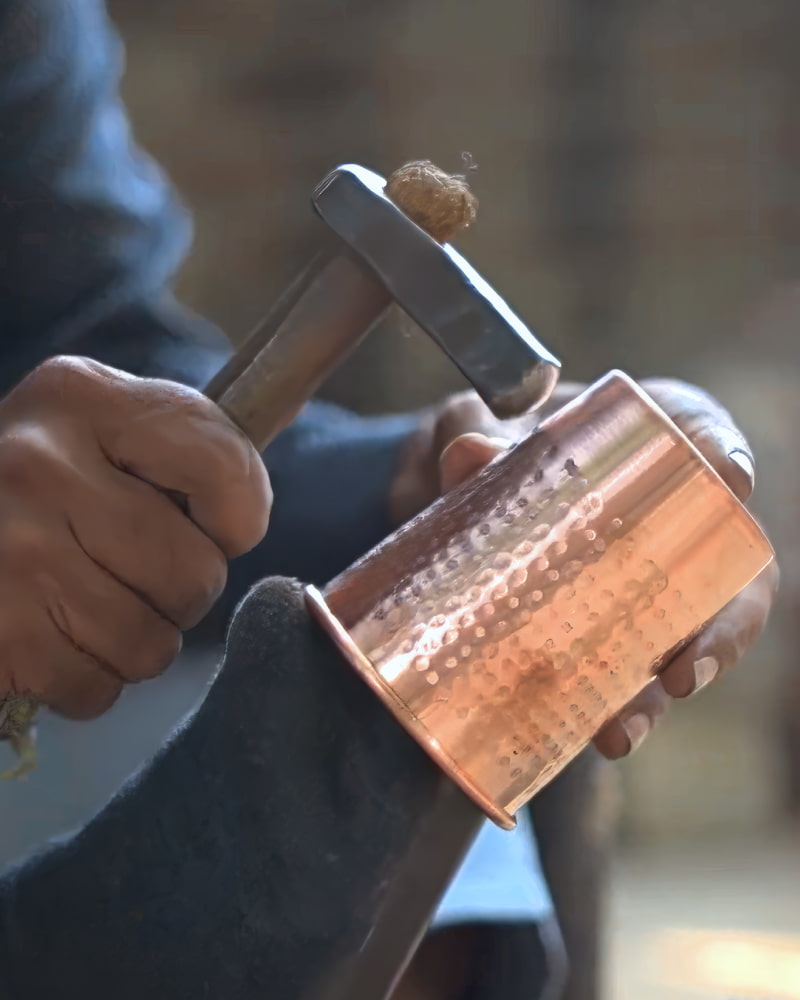
Our products are handcrafted at our production facility in India by skilled artisans, drawing on copperworking techniques and craftsmanship passed down through generations.
We use recycled copper sourced from established suppliers in India. The copper used for our products is selected according to our material and quality requirements.
Our products are handcrafted by experienced artisans using traditional metalworking techniques. We do not employ child labour in our production facility and aim to provide a safe and respectful working environment for everyone involved in our production.
Yes. Our copper products were tested under defined laboratory conditions using both filtered and unfiltered water. The tests measured, among other parameters, the water’s pH level, alkalinity, and copper content after different storage periods.
In a separate microbiological test, water containing coliform bacteria and E. coli was examined. At the beginning of the test, 46 units of coliform bacteria and 10 units of E. coli per 100 ml were measured. After six hours of storage in the tested copper bottle, neither was detectable within the scope of this test. View laboratory test Results.

Our copper drinkware is made from more than 98% pure copper. The material purity has been tested by TÜV Rheinland in 2022.
The drinking surface on the inside is left untreated and has no inner coating. The exterior is finished with a protective lacquer designed to help preserve the appearance of the copper and slow down natural tarnishing.
As copper is a natural metal, changes in colour and oxidation may occur over time, particularly on the untreated interior. These changes are characteristic of copper and can usually be removed using the recommended cleaning method. Please refer to the individual product description for specific material information, dimensions and care instructions.
The practice of storing drinking water in copper vessels has a long tradition in India and is known in Ayurveda as Tamra Jal.
We value this tradition as part of the cultural heritage behind our copperware. References to Ayurveda on our website describe traditional practices and should not be understood as medical or health claims.
Our own laboratory testing focuses instead on measurable parameters, such as changes in pH, alkalinity, copper content and microbiological observations under defined test conditions. Always fill your copper vessel with water that is already suitable for drinking. A copper vessel should not be used as a substitute for appropriate water treatment or purification.
For normal use, we recommend storing still drinking water in your copper vessel for approximately 8–12 hours, for example overnight.
This recommendation reflects the intended use of our products and the storage periods considered in our testing. It is not necessary to store the water for longer periods.
We recommend replacing the water regularly and not leaving the same water in the vessel for extended periods. Longer storage may affect the taste and may increase the amount of copper transferred into the water.
If the water develops an unusually strong metallic taste, empty the vessel, clean it thoroughly and refill it with fresh drinking water.
Our copperware is designed exclusively for still drinking water.
You can use normal potable tap water or filtered drinking water.
Do not add lemon, citrus fruits, fruit pieces, juice, herbs, salt or other ingredients to water stored in the copper vessel. We also recommend avoiding carbonated water.
The untreated copper interior is intentionally designed for contact with still drinking water, so using the product only as intended is important.
No. Our copper drinkware is intended exclusively for still drinking water.
Do not use it for:
Acidic, salty and certain other liquids can react with untreated copper and may increase the transfer of copper into the beverage.
Copper is also an excellent conductor of heat. For this reason, our copperware is not intended for boiling or very hot liquids, as the exterior can become hot to the touch.
Please use the product only for its intended purpose: storing and drinking still water.
We recommend storing your copper bottle at normal room temperature rather than in the refrigerator. Copper does not provide thermal insulation, so refrigeration is not necessary for the intended use of the product. Avoid extreme or rapid temperature changes and never place the bottle in a freezer.
The taste can vary depending on the water itself, the storage time and the condition of the copper surface. Water stored in a clean copper vessel may have a subtly smoother or softer taste, although this can vary from person to person. A slight metallic note can sometimes occur, particularly after longer storage. If you notice a strong or unpleasant metallic taste, we recommend emptying the bottle, cleaning the interior thoroughly and refilling it with fresh drinking water.
A strong metallic taste can also be a sign that the water has been stored for too long.
Our copper bottles are designed for regular use with still drinking water when used according to the supplied instructions.
Copper can naturally transfer in small amounts from an untreated copper surface into water. The amount transferred depends on factors including the water composition, temperature and duration of contact.
For this reason, we recommend following our intended-use and storage instructions rather than making assumptions that more or longer-stored copper water is better.
If you have a medical condition, have been advised to restrict your copper intake, or have concerns regarding your individual dietary requirements, please seek advice from an appropriate healthcare professional. The taste can vary depending on the water itself, the storage time and the condition of the copper surface. Water stored in a clean copper vessel may have a subtly smoother or softer taste, although this can vary from person to person. A slight metallic note can sometimes occur, particularly after longer storage. If you notice a strong or unpleasant metallic taste, we recommend emptying the bottle, cleaning the interior thoroughly and refilling it with fresh drinking water.
A strong metallic taste can also be a sign that the water has been stored for too long.
There is no special quantity of water that needs to be consumed simply because it has been stored in a copper vessel. Your individual water requirements depend on factors such as age, diet, activity level, climate and health. Our copperware is designed as drinkware for still drinking water. We therefore do not recommend a specific daily amount of “copper water” for health purposes. Laboratory testing of our products has measured the amount of copper transferred into water under defined conditions. These results can be viewed in our laboratory report. View laboratory test Results
Copper may naturally transfer in small amounts from the untreated interior surface into water.
The amount can vary depending on the composition of the water, storage duration, temperature and condition of the copper surface. As part of our laboratory testing, the copper concentration in water was measured after defined storage periods. For reference, EU drinking-water legislation specifies a parametric value for copper of 2.0 mg/L. Our laboratory report provides the actual measurements obtained under the conditions used in our tests. View laboratory test Results
Our copperware is not intended to diagnose, treat or correct copper deficiency. Although small amounts of copper may transfer naturally from an untreated copper surface into water, our products are sold as drinkware and not as a source of dietary supplementation or medical treatment. If you suspect that you have a copper deficiency or another nutritional deficiency, please consult a doctor or other qualified healthcare professional.
Our copper bottles are designed with a silicone sealing ring in the lid to provide a secure, leak-resistant closure when the lid is correctly fitted. Always make sure that the silicone ring is properly positioned and that the lid is securely closed before carrying the bottle in a bag. As with any reusable bottle, we recommend periodically checking the sealing ring for wear or damage.
Copper-on-copper threads can occasionally produce a squeaking sound when the bottle is opened or closed. This does not normally affect the function of the bottle. If this occurs, apply a very small amount of coconut oil to the threads around the bottle opening and lid. Leave it briefly, then wipe away any excess before using the bottle again.
Our copper bottles are not insulated and are not designed to maintain the temperature of water in the same way as a vacuum-insulated or thermos bottle.
The temperature of the water will gradually adjust to the surrounding environment.
Copper naturally changes in appearance when exposed to water, air and regular use. The untreated interior may therefore become darker or develop spots over time. This is a normal characteristic of copper. For everyday care, empty the vessel after use, rinse it with clean water and allow it to dry thoroughly.
For a deeper clean, particularly when visible oxidation or deposits appear on the untreated interior, follow our recommended cleaning method.
Important care instructions:
For detailed instructions, please see our Product Care & Cleaning Guide.
The interior of our copper drinkware is intentionally left untreated. Because copper naturally reacts with oxygen, moisture and substances present in water, its colour and surface can change over time. Darkening, water marks and areas of oxidation can therefore occur during normal use.
Greenish deposits should be removed before using the vessel again. Empty the vessel and clean it thoroughly according to our recommended cleaning method. Rinse well with clean water before refilling.
If a deposit cannot be removed using the recommended cleaning procedure, discontinue use and contact our customer service team for advice.
Please see our Product Care & Cleaning Guide for detailed cleaning instructions.

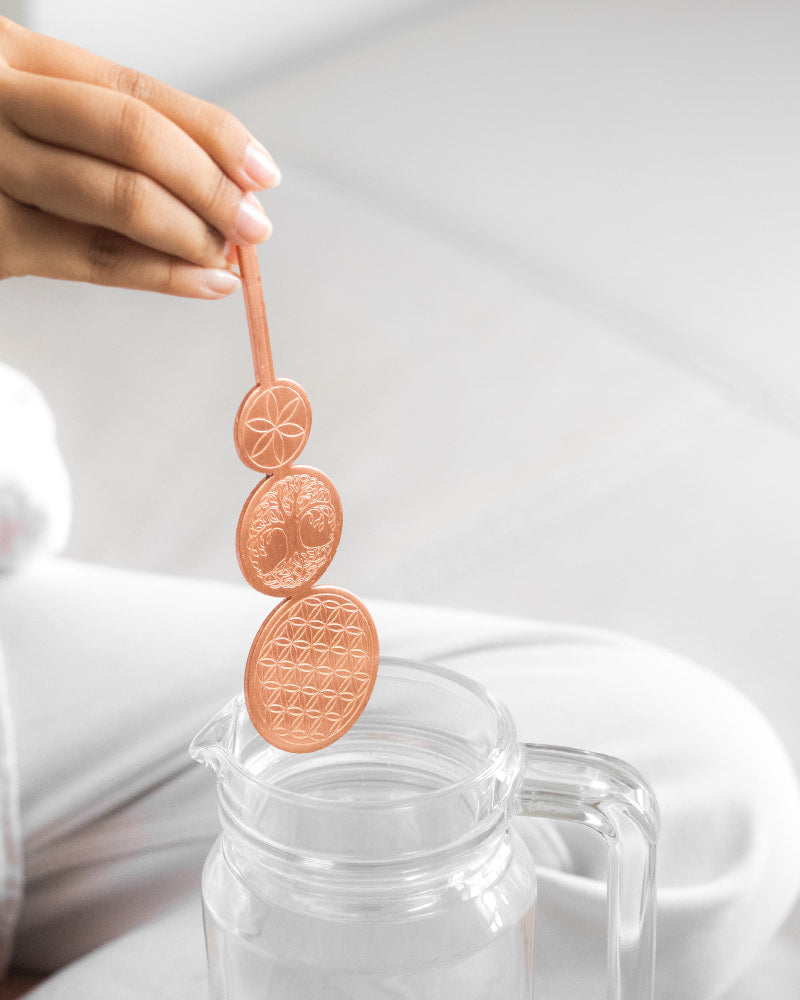
Simply hook the Copper Infuser onto the rim of a glass jug, carafe or other suitable wide-mouthed vessel and immerse it in still drinking water for 4–12 hours or ideally overnight.
Our laboratory testing examined the effect of the Copper Infuser on the pH of still drinking water over this period. In the tested samples, the pH increased progressively during 12 hours of contact with the copper.
After use, remove the Infuser, rinse it with clean water and allow it to dry. Alternatively, its decorative design means it can remain an elegant feature in your water carafe while the water is being stored. Use the Copper Infuser only with still drinking water and do not add lemon, fruit, juice, herbs, salt or other ingredients.
The Copper Infuser provides a simple way to bring still drinking water into contact with an untreated copper surface without requiring a complete copper vessel. Storing water in copper vessels is a traditional practice in India and is known in Ayurveda as Tamra Jal. Our Copper Infuser offers a contemporary interpretation of this tradition and can be used with your existing glass jug or carafe.
Beyond this traditional background, we have also investigated a measurable physical parameter under laboratory conditions: the pH of the water. In laboratory testing with still drinking water, both tested Copper Infusers increased the pH of the water progressively over a period of 12 hours. References to Ayurveda describe traditional practices and should not be understood as medical or health claims.
Yes. Our Copper Infusers were tested under defined laboratory conditions to examine their effect on the pH value of still drinking water over a period of 12 hours.
For the Feather Copper Infuser, the pH changed as follows:
Under these specific test conditions, the pH therefore increased from slightly below neutral to above pH 7 during contact with the Copper Infusers.
These results relate to the specific water samples, products and laboratory conditions tested and should not be interpreted as a general health or therapeutic claim.
In our laboratory test, the pH of the tested still drinking water increased during contact with the Copper Infusers.
The starting pH values were 6.64 and 6.66. After four hours, both samples had reached a pH above 7, and after 12 hours the measured values were 7.49 for the Feather Infuser.
A pH above 7 is classified as alkaline on the pH scale. However, the extent of any change can vary depending on factors such as the starting composition and pH of the water, contact time and condition of the copper surface.
The laboratory results describe a measurable change in the tested water and are not intended to imply a health benefit from drinking alkaline water.
We recommend immersing the Copper Infuser in still drinking water for approximately 4–12 hours or ideally overnight.
This recommendation corresponds to the time periods examined in our laboratory test. Measurements were taken at the beginning and after 4, 8 and 12 hours, with a progressive increase in pH observed during the test period.
There is no need to leave the Infuser immersed for longer than 12 hours for its intended use.
The Copper Infuser is designed exclusively for use with still drinking water.
You can use potable tap water or filtered drinking water. Do not use the Infuser with carbonated water, juice, lemon water, flavoured water, milk, alcoholic beverages or water containing fruit, herbs, salt or other additives.
Acidic and salty liquids can react with untreated copper and may increase the transfer of copper into the liquid. Always start with water that is already suitable for drinking. The Copper Infuser is not intended to make unsafe or contaminated water suitable for consumption.
We do not recommend using the Copper Infuser as a method of water purification or disinfection. Our Copper Infuser laboratory test investigated changes in pH. It did not test microbiological purification, E. coli reduction or sterilisation. For this reason, always use potable water that is already safe to drink.
Copper naturally changes in appearance when exposed to water, oxygen and regular use. Over time, your Copper Infuser may therefore become darker, develop water marks or show areas of oxidation. These visual changes are characteristic of an untreated copper surface and do not necessarily indicate a defect in the product.
Regular cleaning will help remove deposits and maintain the appearance of the Infuser.
Greenish deposits can develop as copper reacts with moisture and substances in its environment. If you notice green deposits, remove the Infuser from the water and clean it thoroughly before using it again. Do not simply leave visible green deposits on the Infuser because they are “natural”. Clean the copper according to our recommended cleaning method, rinse thoroughly with clean water and allow it to dry before returning it to drinking water. If the deposit cannot be removed using the recommended cleaning procedure, discontinue use and contact our customer service team.
Regular cleaning helps maintain the untreated copper surface. For a deeper clean, apply a small amount of lemon and salt to the copper surface and gently clean the Infuser. Do not leave the acidic mixture on the copper for an extended period. After cleaning, rinse the Infuser very thoroughly with clean water to remove all traces of lemon and salt, then dry it completely with a soft cloth. For everyday care, rinse with clean water after use and allow it to dry thoroughly.
Please note:
See our Product Care & Cleaning Guide for detailed instructions.

Tongue cleaning helps remove visible coating and accumulated debris, leaving the tongue and mouth feeling cleaner and fresher. In Ayurveda, tongue scraping is traditionally practiced as part of the daily morning routine.
Yes. In a microbiological laboratory test, the total plate count in a tongue swab decreased from 72 CFU before use to 19 CFU after use of our Copper Tongue Cleaner.
The results relate to the specific sample and test conditions and should not be interpreted as a medical or therapeutic claim.
Copper has a long tradition in Ayurveda and is valued for its durability and characteristic properties. Our reusable Copper Tongue Cleaner combines this traditional material with a simple, modern oral-care ritual.
Hold both ends, place the curved section towards the back of your tongue as far as feels comfortable, and gently pull it forward. Repeat 3–4 times, rinsing between strokes. Avoid excessive pressure.
Start only as far back as feels comfortable. As you become accustomed to tongue scraping, you may gradually position the cleaner slightly further back. Never force it.
Rinse thoroughly under running water after every use and allow it to dry. Natural copper discoloration can be removed with a little lemon and salt. Rinse thoroughly afterwards and dry completely.
Pure copper naturally oxidises and may darken or develop spots over time. This is characteristic of untreated copper and does not necessarily mean the product needs replacing.
If greenish deposits appear, clean the Tongue Cleaner thoroughly before using it again. Replace it if it becomes damaged, develops sharp edges or can no longer be cleaned properly.

Wear the bracelet comfortably around your wrist or lower arm. As it is an open cuff design, you can gently adjust it to find a comfortable fit.
Yes. Our bracelets feature an open-ended cuff design and can be gently adjusted to fit your wrist. Avoid repeatedly bending or overstretching the bracelet, as this may weaken or deform the copper over time.
Copper has been used for jewellery and decorative objects for centuries and is valued for its warm colour, distinctive character and naturally evolving surface. Our bracelets are crafted from high-quality copper and designed as wearable pieces that combine traditional material with contemporary design.
Copper has a long history of use in traditional cultures, including Ayurveda, where it has been associated with concepts of balance and wellbeing. Our Copper Bracelets are sold as jewellery. Traditional references to copper and Ayurveda describe cultural practices and beliefs and should not be understood as medical or therapeutic claims.
Store your bracelet in a clean, dry place and avoid prolonged contact with water, perfumes, lotions, oils and household cleaning products. We recommend removing it before showering, swimming or exercising. If necessary, gently clean the bracelet with a soft cloth. To restore the natural copper shine, you can occasionally clean it with a small amount of lemon and salt. Rinse thoroughly afterwards and dry completely.
Copper naturally reacts with air, moisture and substances in its surroundings. Over time, your bracelet may therefore darken, develop spots or acquire a natural patina.
These changes are characteristic of copper and make each piece unique. If you prefer the original shine, the surface can be cleaned using our recommended cleaning method.
Yes. Copper can react with perspiration, moisture, skincare products and substances naturally present on the skin, occasionally leaving a temporary greenish mark. The extent of this reaction varies from person to person and is a natural characteristic of wearing copper jewellery. The colour can normally be washed off easily with soap and water.
If you experience persistent redness, itching or skin irritation, remove the bracelet and discontinue use.
Copper conducts heat very efficiently and quickly responds to the temperature of your skin and surroundings. This means that the bracelet may sometimes feel warmer or cooler while you are wearing it. This is a natural physical property of copper and should not be interpreted as an indication of a physiological or therapeutic effect.
I acknowledge: If a delivery cannot be completed due to my absence or failure to collect it (e.g. from a parcel shop), and I decline redelivery, I bear the resulting return shipping cost in line with Section 4 of our Cancellation Policy. If a partial return causes the remaining order value to fall below our free-shipping threshold, the original shipping cost will be deducted from the refund. My statutory right of withdrawal under Section 4 is unaffected.